


Emerson has reported progress across emissions reduction, energy efficiency, waste diversion and workforce engagement in its 2025 Sustainability Report, while positioning industrial automation and operational efficiency as key enablers of long-term sustainability transformation.
Emerson reports progress toward emissions and energy targets
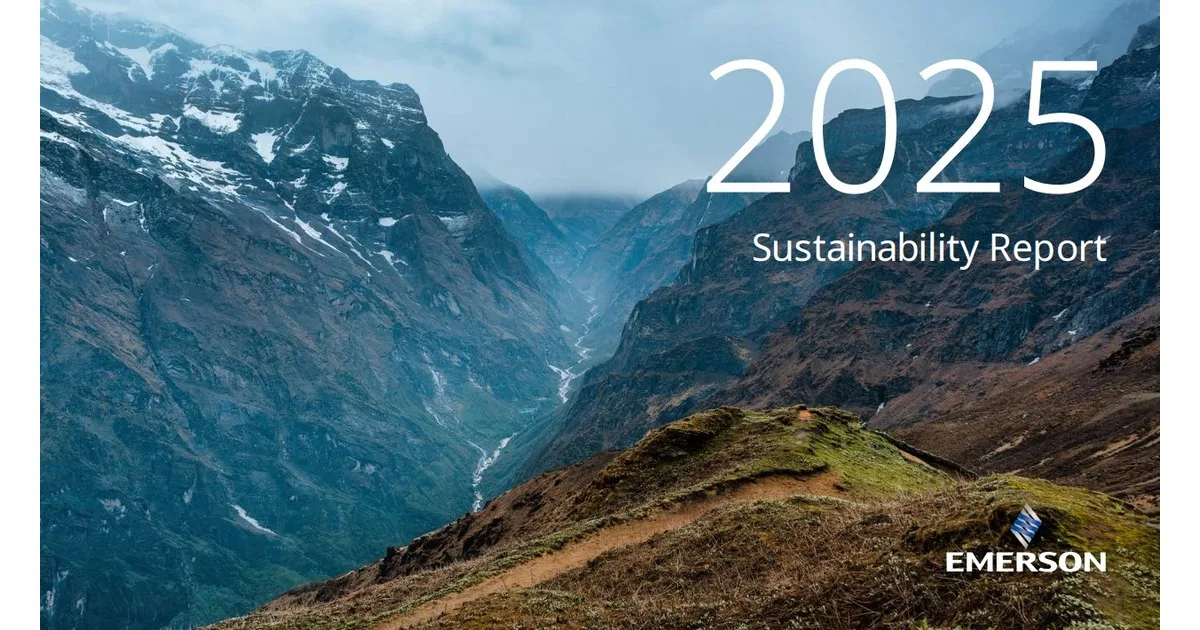
Industrial automation company Emerson has released its 2025 Sustainability Report, outlining progress across environmental performance, operational efficiency and workforce initiatives.
The company reported a 49% reduction in Scope 1 and 2 emissions from a 2021 base year, alongside a 27% reduction in energy intensity over the same period.
Emerson also said it has diverted 70% of non-hazardous waste from landfill and incineration across manufacturing facilities since its 2022 baseline.
The company’s sustainability goals include reducing Scope 1 and 2 emissions by 90% by 2030, achieving net zero operations by 2030 and net zero across its value chain by 2045.
Sustainability strategy linked to industrial innovation
Emerson said sustainability remains closely tied to its automation and operational efficiency strategy, both internally and across customer operations and its technologies continue to support lower-carbon and more reliable industrial operations across multiple sectors worldwide.
“Our 2025 results reflect the dedication of our entire organization to drive innovation and operational excellence,” said Mike Train, Chief Sustainability Officer at Emerson.
“From our own facilities to our products and the collaborations we foster, we’re committed to delivering solutions that help our customers, employees and communities thrive.”

The report also highlighted Emerson’s role in industrial decarbonisation projects and climate collaboration initiatives.
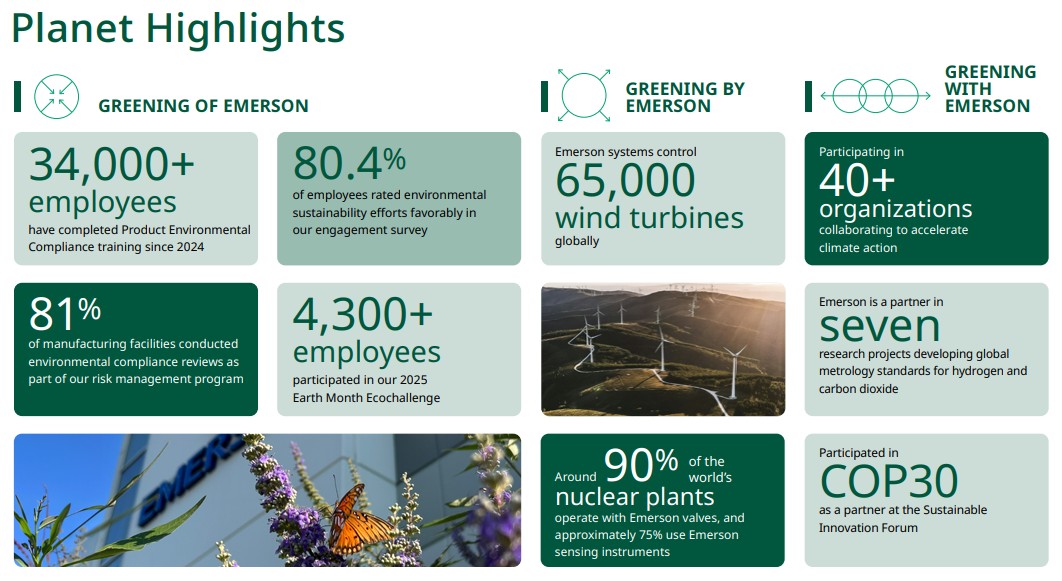
Emerson systems currently control 65,000 wind turbines globally, while around 90% of nuclear plants operate with Emerson valves and approximately 75% use Emerson sensing instruments and it is participating in seven research projects focused on developing global metrology standards for hydrogen and carbon dioxide.
External sustainability ratings and operational goals advance
Emerson reported receiving an ‘A’ rating from CDP on Climate Change for the second consecutive year and the company also achieved a Gold EcoVadis rating, placing it among the top 5% of companies globally for sustainability performance.
Other environmental targets outlined in the report include:
- 100% renewable electricity procurement by 2032
- A 35% reduction in water purchased for manufacturing facilities
- A 90% reduction in Scope 3 emissions by 2045
A total of 81% of manufacturing facilities completed environmental compliance reviews as part of its risk management programme in 2025.
Workforce engagement and safety metrics improve
Alongside environmental progress, Emerson highlighted workforce engagement, safety and training initiatives as core parts of its sustainability programme.
The company achieved a 78.9% employee engagement score and reported a Total Recordable Injury Rate of 0.25. It also reaffirmed its pledge of $200 million over 10 years to support educational opportunities in communities where it operates.
According to the report, more than 95% of employees work at manufacturing locations that completed health and safety risk assessments within the previous year.
- 91% participation in its employee engagement survey
- A 79.9% inclusion index score
- More than 97% completion of learning modules among active learners
- Over 9,000 customers participating in Emerson training programmes
Responsible sourcing and supply chain oversight remain priorities
The report also outlined Emerson’s ongoing work around ethics, cybersecurity and responsible sourcing with 66% of direct material suppliers by spend completed its Supplier Code of Conduct self-assessment survey, while more than 750 suppliers have attended Responsible Sourcing Webinars since 2023.
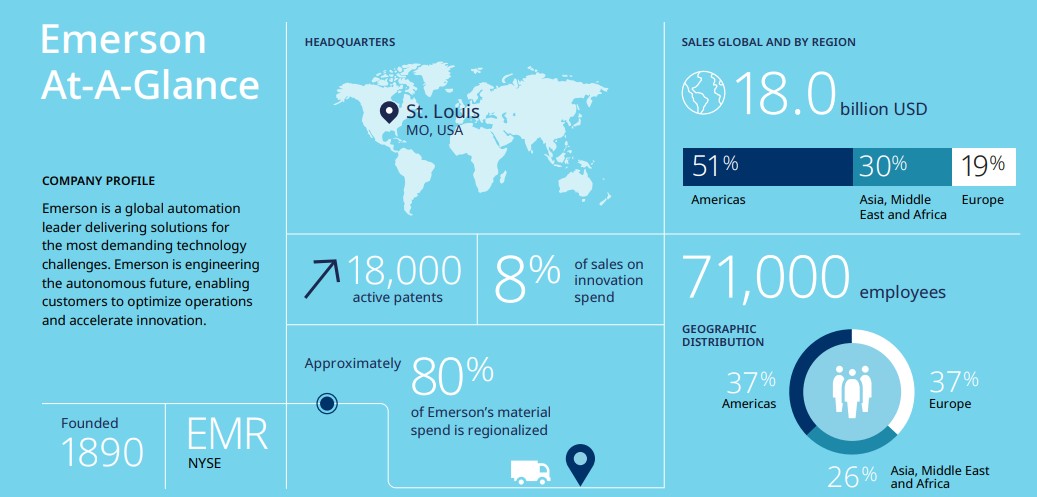
Company data outlines 80% of its material spend is regionalised to help reduce lead and transit times and Emerson also reported that more than 97% of employees completed ethics training during 2025, while its cybersecurity operations maintain 24×7 incident response capabilities.
This article was produced by the editorial team at Sustainability Outlook and published as part of the Outlook Publishing global network of B2B industry magazines.
Outlook Publishing delivers industry insights, company stories, and sector coverage across sustainability, energy transition, manufacturing, mining, construction, supply chains, healthcare, and food production.
Sustainability Outlook provides ongoing coverage of organisations and developments shaping the global sustainability landscape.