



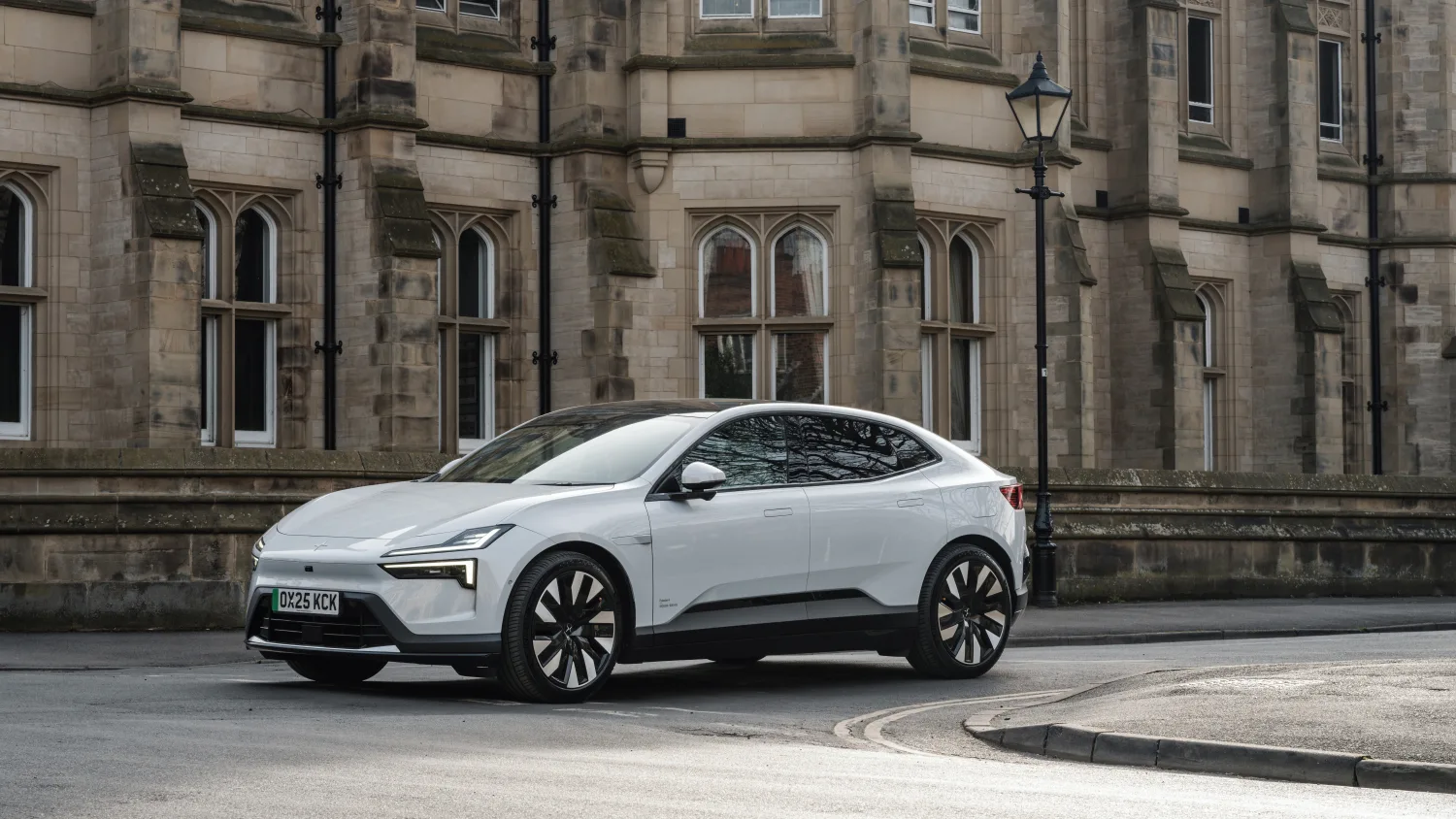
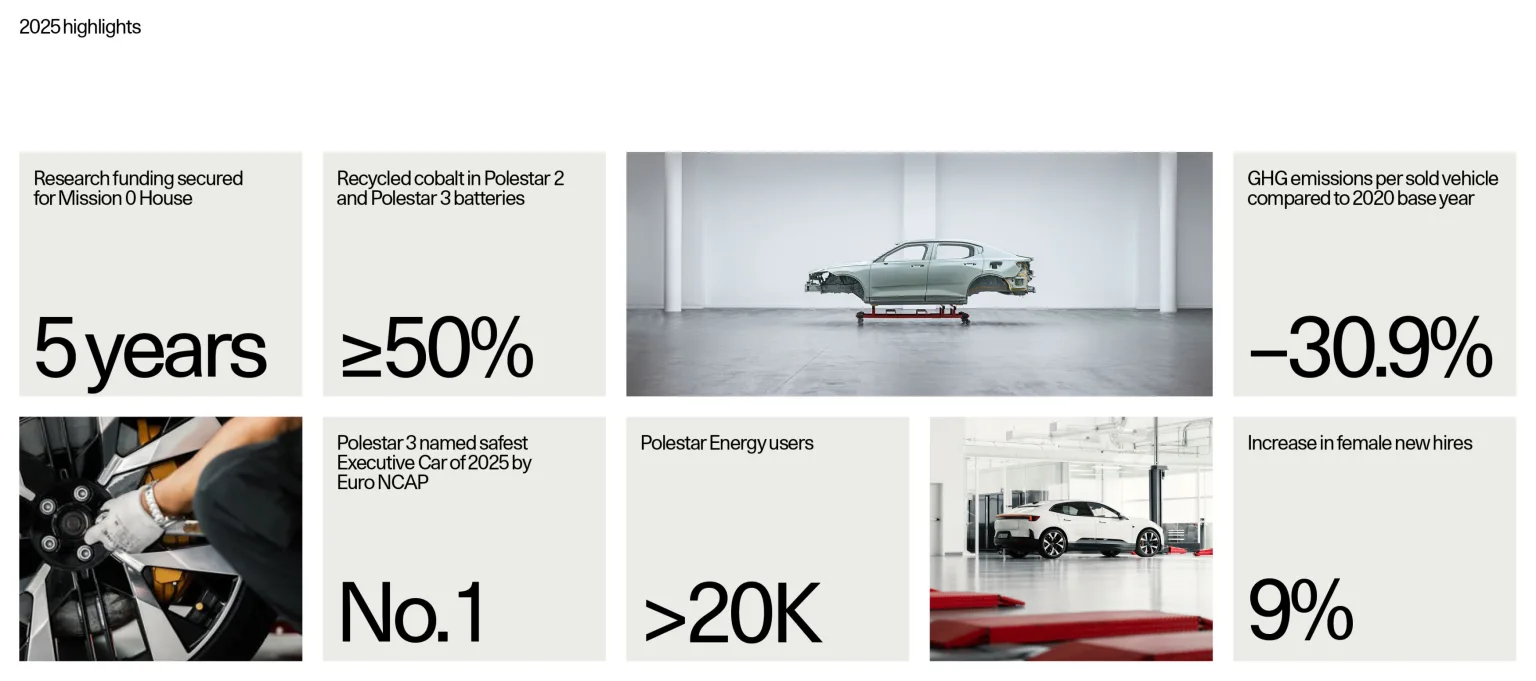
Polestar has reduced greenhouse gas emissions per vehicle sold by 31% since 2020 while expanding sales, entering new markets and growing its product portfolio, according to the company’s 2025 Sustainability Report.
Delivering on Climate Targets
The electric vehicle manufacturer said the reduction demonstrates that business growth and emissions reduction can be achieved simultaneously, despite ongoing challenges across the automotive sector and shifting climate commitments within the industry.
During the same period, Polestar increased annual retail sales to more than 60,000 vehicles, expanded into 28 markets, launched three new models and established manufacturing operations in three countries.
“This year, we once again delivered on our climate targets and stayed aligned with our roadmap. With a 30.9% reduction in GHG emissions per sold car to date, we are proving that real progress is possible
when an entire organisation is focused on the same goal,” said Fredrika Klarén, Head of Sustainability, Polestar.

“While other car companies spend billions of dollars researching how to make legacy technology such
as combustion engines more efficient, or how to secure continued sales of ICE cars by developing e-fuels, we focus our research teams on one clear topic: create climate-neutral materials which will be our industry’s material portfolio in a decarbonised world.”
“This is where we believe long-term value will be created.”
Emissions Reduction Through Renewable Energy and Low-Carbon Materials
The company attributes its emissions reductions to increased use of renewable energy in battery production and manufacturing, alongside the adoption of lower-carbon materials across its supply chain.
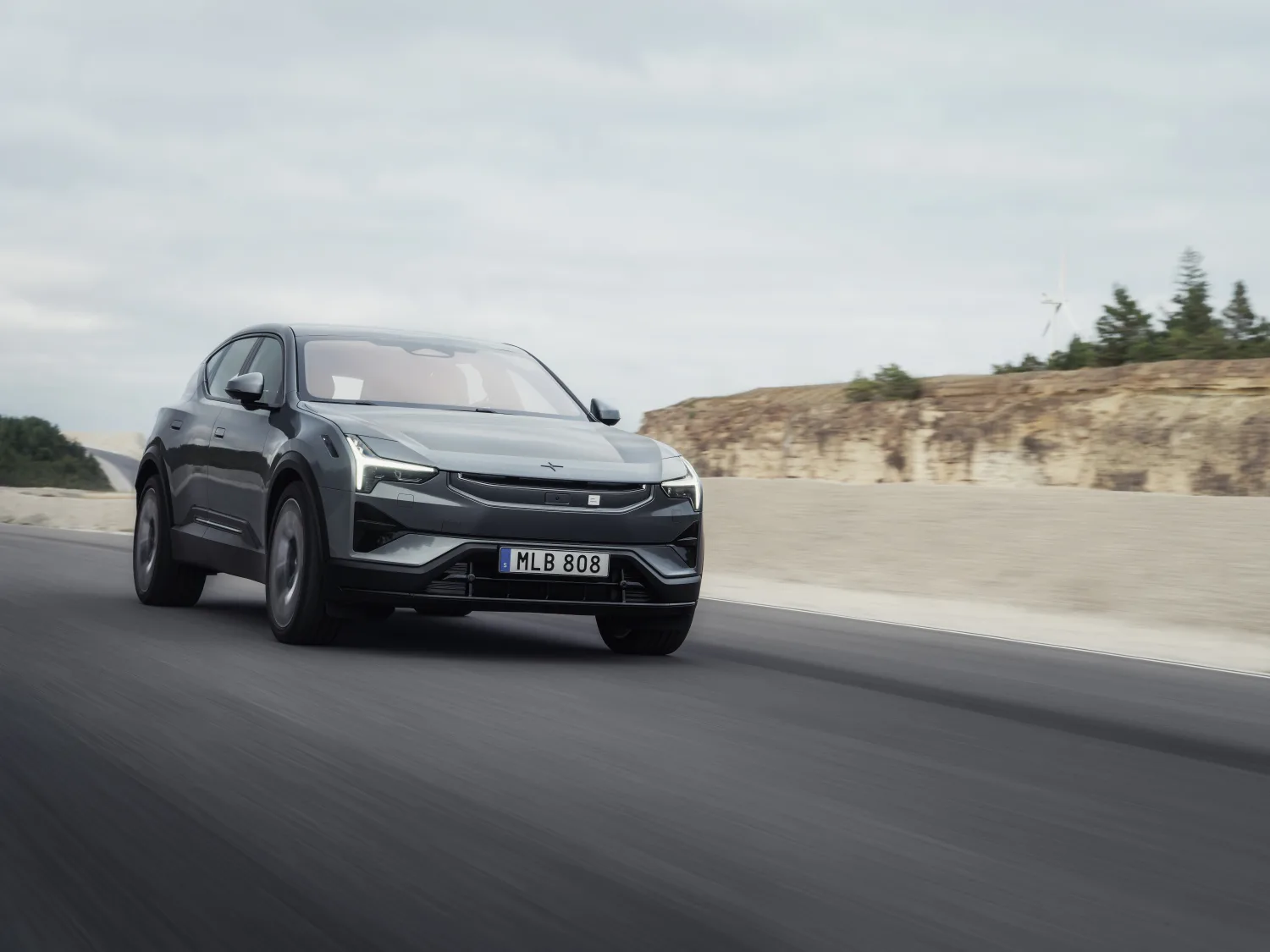
Polestar said the growing contribution of the Polestar 4, which it describes as its lowest carbon footprint vehicle to date, has also supported progress. Additional reductions have been driven by increased renewable electricity use across key European markets, where more than 75% of the company’s sales are generated.
The company stated that it remains ahead of its emissions reduction trajectory as it works towards its goal of becoming climate neutral by 2040.
Michael Lohscheller, CEO, Polestar, said: “If you are not reducing emissions while growing, you are choosing not to. Electrification delivers clear value for customers: lower running costs, lower emissions and greater peace of mind, as volatile oil prices and fuel scarcity mean pump anxiety is increasingly replacing range anxiety. As clean electricity scales, electric vehicles are becoming not just the sustainable choice, but the smarter, more reliable one.”

Building a Lower-Carbon Automotive Value Chain
Polestar said reducing emissions requires action across the entire vehicle lifecycle, including manufacturing, materials sourcing and energy use.
The company highlighted its focus on increasing renewable energy use within production processes and accelerating the adoption of lower-carbon materials. These efforts form part of a broader strategy aimed at reducing lifecycle emissions while scaling production.
According to the company, electrification remains a key pathway for reducing greenhouse gas emissions from passenger transport, particularly as renewable energy generation continues to expand.
Polestar 0 Project Advances Low-Carbon Materials Research
A central component of Polestar’s long-term sustainability strategy is the Polestar 0 project, which aims to develop a net-zero vehicle without the use of offsets.
Research activities are coordinated through Mission 0 House in Gothenburg, where industry and academic partners are working to eliminate emissions from materials, products and manufacturing processes.
Key developments from the initiative include:
- A large-scale pilot programme for ultra-low-emission steel
- Research into battery materials
- Development of bio-based textile alternatives
- Technologies that convert CO₂ into new materials
The company said the original 2030 target for delivering a net-zero car has been revised to 2035, reflecting the complexity of eliminating emissions across the automotive value chain.
Collaboration Drives Sustainability Innovation
Mission 0 House was formally established in 2025 and has secured close to SEK 100 million in funding over five years.
The collaboration currently includes five Swedish higher education institutions and six companies working on research programmes covering metals, chemicals and industrial processes. Polestar said the initiative is designed to develop scalable solutions and intellectual property that can support climate-neutral materials and products across manufacturing industries.
Fredrika Klarén, Head of Sustainability, Polestar, said: “The Polestar 0 project pushes us into new territory. While much of the industry invests in hybrids and combustion engines, we focus on solutions that eliminate emissions entirely. The innovation emerging from this project shows the power of collaboration and material science, and importantly, how well positioned we are to move the industry forward.”