



McLaren Racing sustainability report highlights emissions reductions, circular manufacturing progress and climate-focused technology partnerships
- Accelerating climate solutions with F1 know-how
- Circular F1 car initiative moves into roadmap phase
- Operational emissions reductions driven by logistics and fuel initiatives
- Coral restoration project applies motorsport engineering to environmental challenges
- Data and partnerships support broader sustainability strategy
- Formula 1 increasingly used as a testing ground for sustainability innovation
Accelerating climate solutions with F1 know-how
McLaren Racing is increasingly positioning Formula 1 as a platform for sustainability innovation, applying engineering expertise, automation and data analytics to projects spanning circular manufacturing, emissions reduction and environmental restoration.
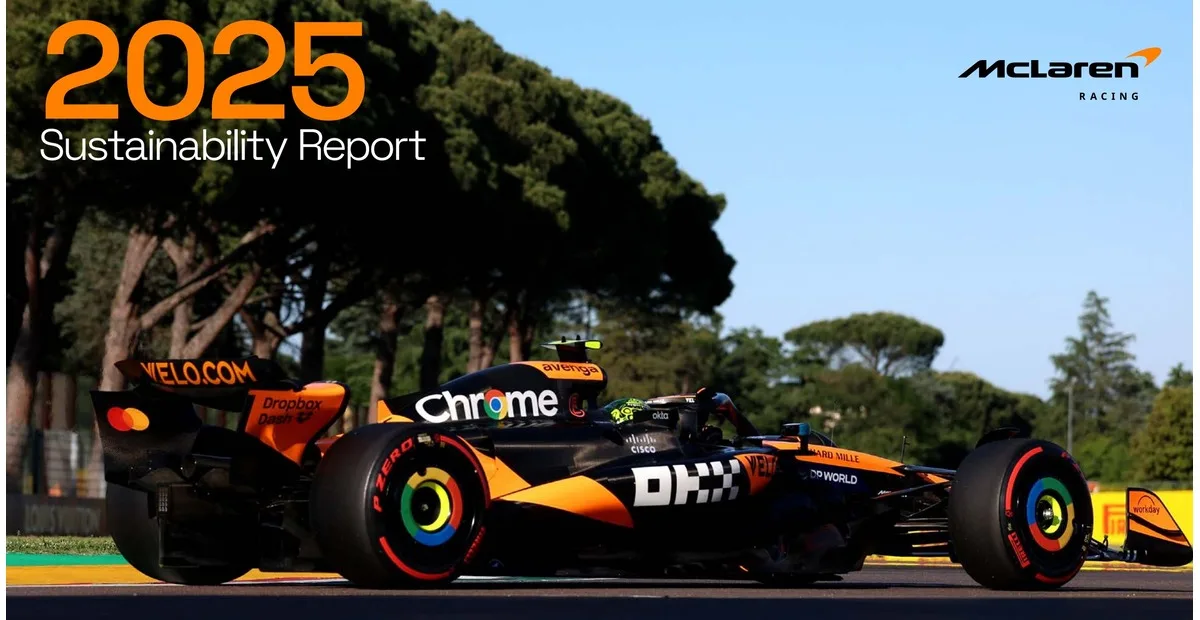
The team’s newly released 2025 Sustainability Report outlines how McLaren is integrating sustainability initiatives across racing operations, logistics, manufacturing and workforce development, while also collaborating with external partners to develop scalable climate-focused technologies.
Circular F1 car initiative moves into roadmap phase
A key focus of the report is the development of a “Circular Car Roadmap,” created with Deloitte and supported by Google’s data capabilities.
The initiative is designed to help McLaren rethink how Formula 1 cars are designed, manufactured and reused, with the long-term objective of increasing material circularity and reducing waste throughout the vehicle lifecycle.
The roadmap builds on McLaren’s previous work around Formula 1 circularity standards and supports the organization’s broader ambition to increase the proportion of recycled and reusable materials used in car production.
According to the report, McLaren maintained 22% circularity across F1 chassis production during 2025 through the use of recycled metals, bio-derived materials and recycling initiatives tied to manufacturing operations.
The team also reported a 14% reduction in total waste and a 40% reduction in hazardous waste disposal from composites manufacturing compared with 2024.
Operational emissions reductions driven by logistics and fuel initiatives
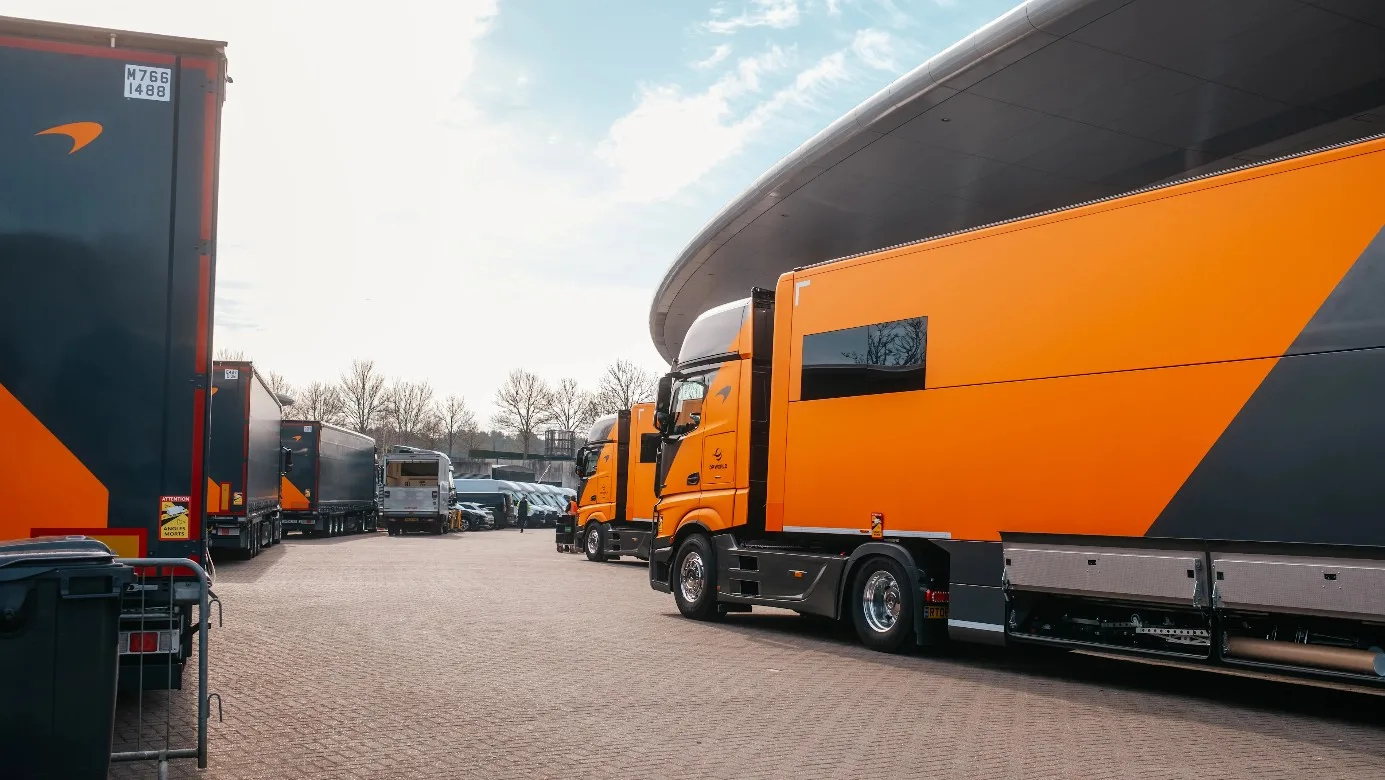
McLaren Racing also reported a 39% reduction in operational emissions versus its baseline, supported by initiatives focused on travel, logistics and fleet operations.
Measures highlighted in the report include:
- Sustainable aviation fuel certificate (SAFc) investments
- Biofuel use across operated fleets
- Freight optimization and lightweighting
- Race calendar efficiencies
- Reduced business travel emissions
Working with Ecolab, McLaren expanded SAF certificate coverage to include all Formula 1 charter logistics and business travel emissions, representing the equivalent of approximately 1.1 million US gallons of fuel.
The report positions logistics optimization and alternative fuel strategies as increasingly important components of operational decarbonization efforts in global sports and transport-intensive industries.
Coral restoration project applies motorsport engineering to environmental challenges
One of the report’s most innovative sustainability initiatives is OSCAR (Operational System for Coral Assembly and Restoration), developed through McLaren Racing’s partnership with the Great Barrier Reef Foundation.
The semi-autonomous coral-seeding system is designed to improve the efficiency and scale of coral restoration projects by automating a previously manual assembly process.
According to McLaren, the technology reduces coral cradle assembly time from approximately 90 seconds to 10 seconds per unit, potentially increasing annual restoration capacity from 100,000 to more than one million coral cradles per year.
The project reflects a broader trend of advanced engineering organizations applying robotics, automation and manufacturing expertise to environmental resilience and restoration projects.
Data and partnerships support broader sustainability strategy
The report also highlights McLaren’s increasing use of data analytics and external partnerships to support sustainability reporting, operational improvements and workforce inclusion initiatives.
McLaren stated that 44.8% of new hires in 2025 came from underrepresented groups, bringing overall workforce representation from underrepresented backgrounds to 36% as the organization works toward its 2030 targets.
The company also expanded its Driver Development Programme with additional female drivers and increased participation in the F1 Academy series.
Zak Brown, CEO, McLaren Racing, said:
“As our sport continues to see incredible growth around the world, it is all the more important that we work hard to reduce our overall impact on the planet and the pressures on global resources – and collaboration and great partnerships are essential to us achieving that. It’s fantastic to see our McLaren Accelerator team apply motorsport know-how to other industries to help supercharge processes and drive efficiencies, with our engineers working alongside marine biologists to find solutions in coral restoration. Equally, I’m excited by the work we’re doing with Deloitte and Google to continue our mission to build a fully circular F1 car. I’m proud of the progress we’ve made to date, and I’m excited about what’s next.”

Kim Wilson, Director of Sustainability, McLaren Racing, added:
“What I’m most proud of in 2025 is seeing the way McLaren Racing’s performance mindset has translated into real sustainability progress. Over the last year, we covered 100% of aviation emissions from business travel and F1 charter logistics with SAFc, maintained 22% circularity in F1 car production, and I saw first-hand the impact of Accelerator’s work with Great Barrier Reef Foundation, in helping to increase the speed of coral reef restoration tenfold through OSCAR.”
“For me, it’s not just about the results; it’s about what they show is possible when data, collaboration and marginal gains come together to drive faster progress on the challenges that matter most. Real progress doesn’t happen all at once – it comes from people working together, staying focused and continuing to find ways to do things better.”
Formula 1 increasingly used as a testing ground for sustainability innovation
McLaren Racing’s latest sustainability report reflects how motorsport organizations are increasingly positioning Formula 1 as a development environment for low-carbon technologies, circular manufacturing systems and operational efficiency initiatives.
The report also highlights how partnerships across engineering, technology and environmental sectors are being used to accelerate innovation beyond racing applications, particularly in areas such as materials management, logistics optimization and restoration technology.
This article was produced by the editorial team at Sustainability Outlook and published as part of the Outlook Publishing global network of B2B industry magazines.
Outlook Publishing delivers industry insights, company stories, and sector coverage across sustainability, energy transition, manufacturing, mining, construction, supply chains, healthcare, and food production.
Sustainability Outlook provides ongoing coverage of organisations and developments shaping the global sustainability landscape.