



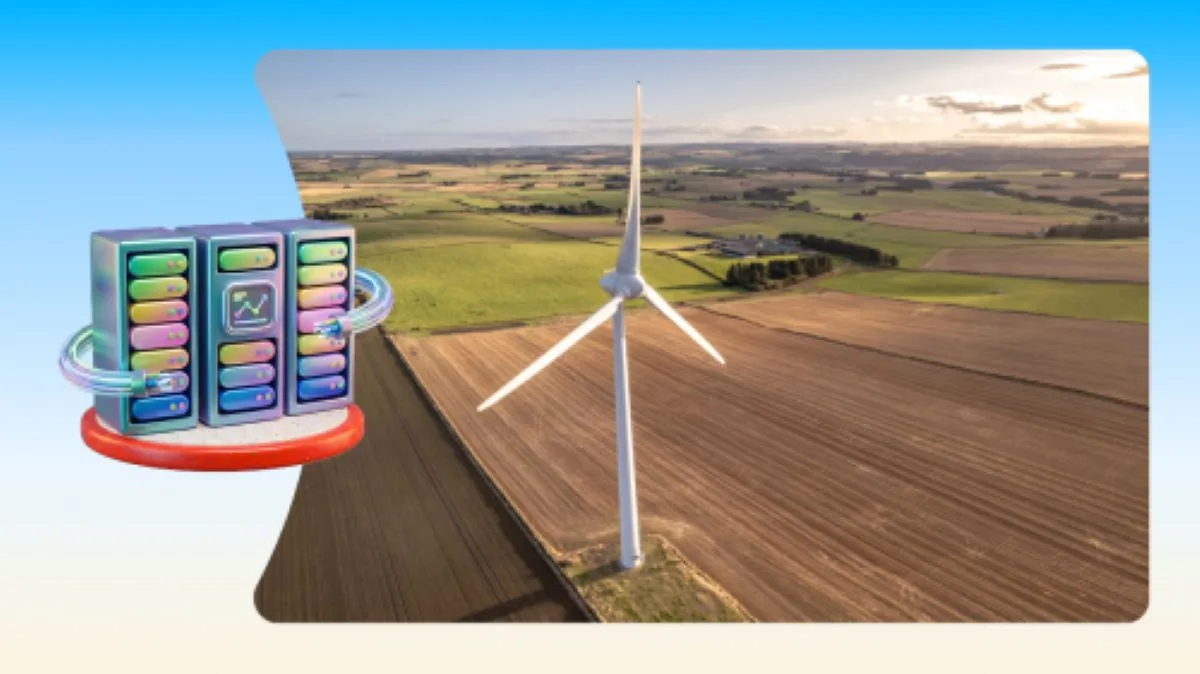
Salesforce has announced a new sustainable approach amidst the continued growth of artificial intelligence (AI), including an environmentally driven procurement strategy, built-for-purpose AI models, and greater visibility into emissions and water usage.
PRESSURES OF RISING AI DEMAND
Salesforce has detailed a five-point strategy designed to reduce the environmental impact of artificial intelligence (AI) growth as global demand for data centers continues to rise.
In a new report published by Salesforce, the company explained how it is embedding sustainability into its AI operations through supplier collaboration, efficient model deployment, real-time emissions monitoring, zero-copy data architecture, and water stewardship initiatives.
According to Salesforce, global data center demand is expected to more than triple by 2030 due to the rapid acceleration of AI, placing additional pressure on power grids and increasing water consumption.

“Beyond today’s energy use, the concern is the projected ‘hockey stick’ growth in demand and whether it will outpace clean energy,” says Sunya Norman, SVP of Impact at Salesforce and leader of the company’s AI sustainability strategy.
PARTNERING TO REDUCE SCOPE 3 EMISSIONS
Salesforce has said it is focusing on indirect, or Scope 3, emissions through partnerships with public cloud providers including Amazon Web Services (AWS) and Google Cloud Platform (GCP), which host the company’s Hyperforce infrastructure.
“This isn’t only an environmental issue. It’s also a business and community one. Companies need to be thinking now about how to manage demand, improve efficiency and transparency, and support the transition to clean energy so innovation can scale responsibly,” Norman says.
“We see our role as helping bring the ecosystem together, working alongside partners across the supply chain so we can collectively make progress that none of us could make alone.”

IMPROVING AI AND DATA CENTER EFFICIENCY
Salesforce also highlighted its focus on “right-sizing” AI models to reduce unnecessary energy consumption. The company said smaller, fine-tuned models used within its Agentforce Trust Layer can operate up to 99 percent more efficiently than larger frontier large language models (LLMs).
In addition, Salesforce said its Hyperforce cloud architecture has delivered an estimated 40 percent increase in operational efficiency through the use of efficient data center facilities, updated hardware, and operational flexibility.

“We use these deep relationships to drive change together,” comments Amanda von Almen, Senior Director of Sustainability Intelligence and Decarbonization at Salesforce.
“We mutually align and work together on shared goals such as data centers powered by 100 percent renewable energy, reducing water use, and using efficient hardware.”
USING AI TO TRACK SUSTAINABILITY PERFORMANCE
The company also emphasized the role of AI-driven sustainability tools. Salesforce said its automated carbon accounting systems have reduced the time spent collecting environmental data by more than 40 percent and cut consultant spending by 37 percent.
Another major focus is zero-copy architecture, which enables AI systems to work directly with external data sources without requiring large-scale data migration or duplication. Salesforce said this approach reduces energy-intensive compute cycles and storage redundancy.

“The value is in being able to bring all of these different sources of data together and not requiring that the data be migrated or copied,” says Paul Constantinides, EVP of Engineering at Salesforce.
EXPANDING WATER STEWARDSHIP INITIATIVES
Water management also forms part of the company’s sustainability strategy. Salesforce said it is expanding its Nature Positive Strategy with a dedicated water program focused on resilient data centers, power supplies, and watersheds.
“As AI infrastructure demand accelerates, the industry response should be increasingly focused on strengthening community relationships, water stewardship, and supporting long-term resource resilience in the regions where this infrastructure operates,” Norman said.
This article was produced by the editorial team at Sustainability Outlook and published as part of the Outlook Publishing global network of B2B industry magazines.
Outlook Publishing delivers industry insights, company stories, and sector coverage across sustainability, energy transition, manufacturing, mining, construction, supply chains, healthcare, and food production.
Sustainability Outlook provides ongoing coverage of organisations and developments shaping the global sustainability landscape.