Lily Sawyer is an in-house writer for Sustainability Outlook Magazine, where she is responsible for interviewing corporate executives and crafting original features for the magazine, corporate...
- Senior Editor
Share
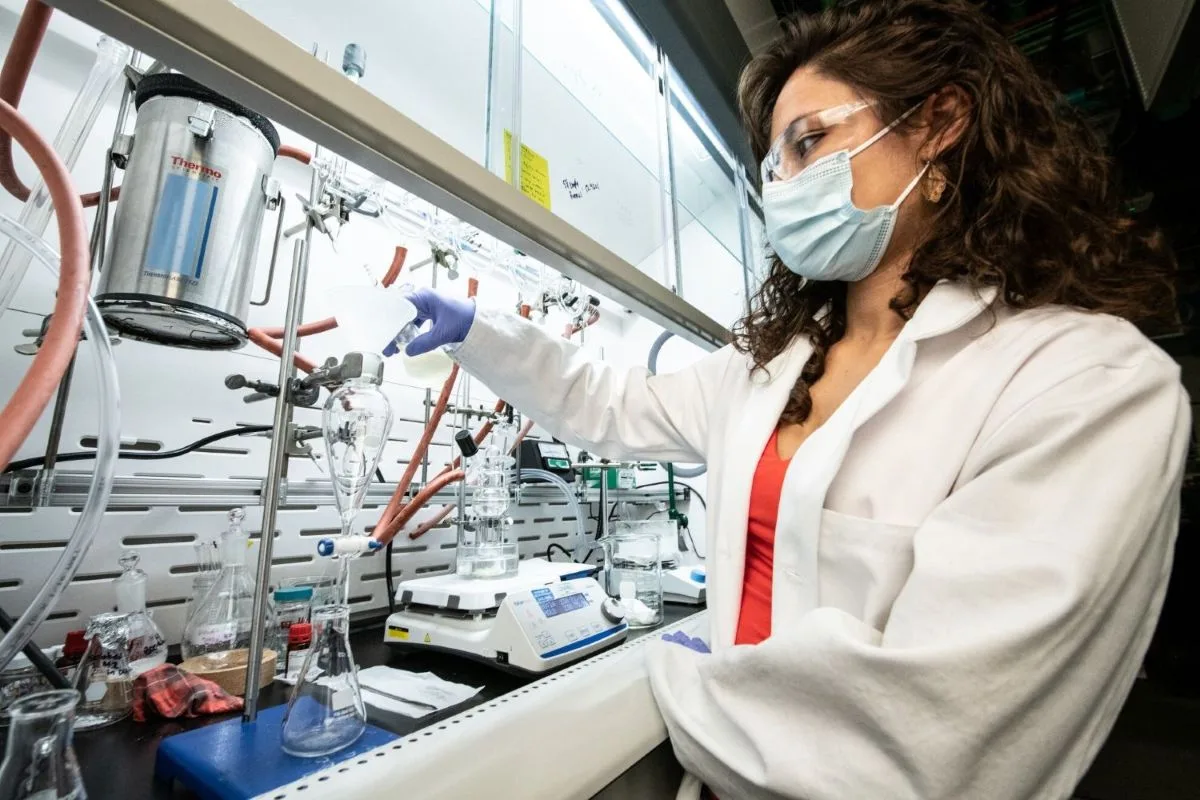
Amazon and the US Department of Energy-backed BOTTLE consortium are collaborating to advance next-generation recycling technologies, aiming to reduce plastic pollution and accelerate the transition to a circular, net-zero materials economy.
The global challenge of plastic waste has long demanded bold, scalable solutions.
A new collaboration between Amazon and the U.S. Department of Energy (DOE) signals meaningful progress in this space.
At the center of the initiative is the BOTTLE consortium, a pioneering research program launched in 2020 to rethink how plastics are designed, used, and ultimately reused.
Short for ‘Bio-Optimized Technologies to keep Thermoplastics out of Landfills and the Environment’, BOTTLE is focused on advancing material innovation and recycling technologies to address one of the world’s most persistent environmental issues.
Led by the National Renewable Energy Laboratory (NREL), the consortium brings together expertise from across public and private sectors, combining scientific research with industrial capability to accelerate real-world impact.
REINVENTING PLASTIC FOR A CIRCULAR FUTURE
Plastics remain essential across countless applications due to their versatility and durability. However, their widespread use – particularly in single-use formats – has created a significant environmental burden.
BOTTLE’s mission is to transform this narrative by enabling plastics to be recyclable by design. Through chemical upcycling, existing plastic materials can be broken down into their molecular components and rebuilt into new, high-value materials. Crucially, these next-generation materials are designed to be more easily recyclable, and in some cases, biodegradable in natural environments.
This approach represents a shift away from traditional linear consumption models towards a circular economy, where materials are continuously reused rather than discarded.
AMAZON’S ROLE IN ADVANCING MATERIALS SCIENCE
Amazon’s participation in the consortium brings additional momentum to the initiative. The company’s team of materials scientists and engineers will work alongside BOTTLE partners to develop energy-efficient technologies capable of processing a wide range of plastics.
The ambition is clear – to create materials that can move seamlessly through a full lifecycle without contributing to carbon emissions.
This includes designing plastics that can be repeatedly recycled into the same or entirely new products, as well as ensuring that any materials that escape the recycling stream can safely biodegrade.
The collaboration also reflects Amazon’s broader sustainability strategy, which prioritizes innovation as a driver of environmental progress. By leveraging its scale and technical expertise, the company aims to accelerate solutions that can be applied not only within its own operations but across industries globally.
“In partnership with BOTTLE, we plan to make significant progress in developing new technologies and materials that will lead to less material in landfills and more back into the circular economy. Science and innovation are at the heart of our sustainability work at Amazon, and we’re committed to using our size and scale to reduce and eliminate our use of materials and find new ones that can be applied to our operations and other industries around the world”
This latest initiative builds on Amazon’s ongoing efforts to reduce packaging waste and improve material efficiency. By 2021, the company had reduced the outbound packaging weight per shipment by 36 percent, eliminating a total of one million tonnes of material while increasing the use of recyclable inputs.
Complementing this, Amazon continues to explore sustainable product design through initiatives such as its Amazon Aware range, which incorporates recycled, organic, and bio-based materials across everyday essentials.
Together, these efforts highlight a broader commitment to embedding sustainability across the value chain – from product design to packaging, and now, advanced material recovery.
COLLABORATION AS A CATALYST FOR CHANGE
The BOTTLE consortium is supported by the DOE’s Bioenergy Technologies Office and Advanced Manufacturing Office, along with a network of national laboratories and universities. This collaborative structure is critical, enabling the cross-pollination of ideas and the rapid scaling of breakthrough technologies.
Ultimately, the partnership between Amazon and BOTTLE underscores a shared recognition that solving the plastic waste crisis will require both scientific innovation and industrial implementation.
By aligning research excellence with global operational reach, the collaboration aims to deliver tangible progress towards a future in which plastics are no longer waste but valuable resources circulating within a sustainable system.
This article was produced by the editorial team at Sustainability Outlook and published as part of the Outlook Publishing global network of B2B industry magazines.
Outlook Publishing delivers industry insights, company stories, and sector coverage across sustainability, energy transition, manufacturing, mining, construction, supply chains, healthcare, and food production.
Sustainability Outlook provides ongoing coverage of organisations and developments shaping the global sustainability landscape.
Lily Sawyer is an in-house writer for Sustainability Outlook Magazine, where she is responsible for interviewing corporate executives and crafting original features for the magazine, corporate brochures, and the digital platform.