Renewable energy moves from ESG to core business strategy
For General Motors, energy strategy is no longer a sustainability side initiative—it is central to business performance.
“Managing energy use isn’t just a checkbox for a corporate environmental report these days; it’s a business necessity,” said Cassandra Garber.
That framing comes as GM reached a major milestone in 2025, securing enough renewable energy to match 100% of its electricity consumption across all U.S. facilities—making it the first U.S. automaker to achieve the benchmark.
Factory ZERO Logo
Scaling renewable energy across a complex manufacturing footprint
The milestone reflects the scale of GM’s U.S. operations, which include assembly plants, design centers, and corporate offices nationwide.
The company’s approach is based on annual “energy matching,” ensuring that every kilowatt-hour of electricity consumed is offset by renewable energy procurement.
“GM contracts for enough clean energy… to equal every kilowatt-hour it pulls from the grid,” Garber wrote, comparing the model to balancing a bank account: “As long as you deposit as much money as you withdraw, your account is balanced.”
Projects such as Newport Solar and Hilltopper Wind Farm are part of that portfolio, with GM prioritizing developments located on the same regional grids as its facilities.
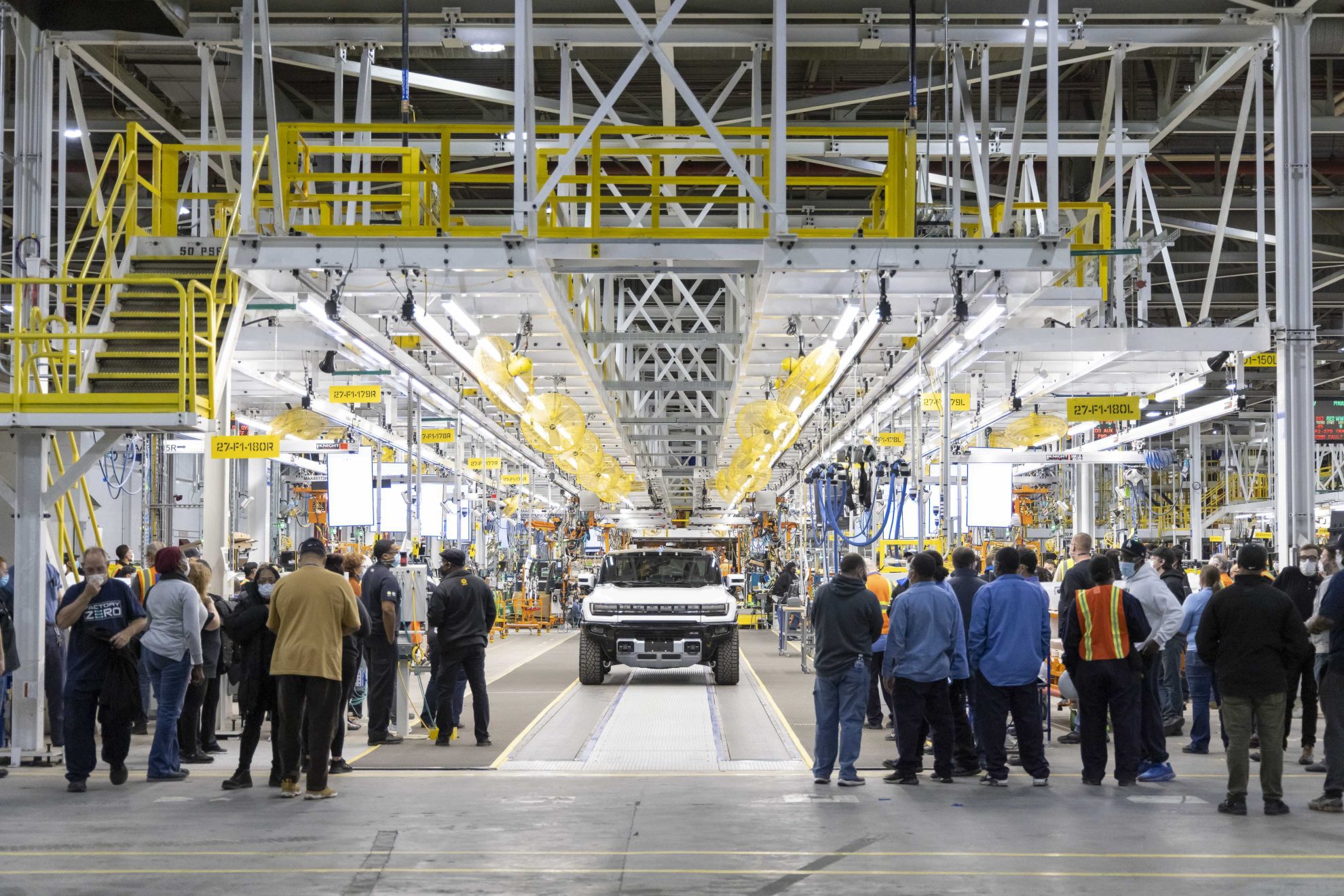
The first 2022 GMC HUMMER EV Pickup Edition 1 exits Factory ZERO in Detroit and Hamtramck, Michigan. VIN 001 was auctioned in March 2021 at the Barrett-Jackson Scottsdale auction for $2.5 million to benefit the Tunnel to Towers Foundation. (Photo by Jeffrey Sauger for General Motors)
Global progress accelerates alongside U.S. leadership
While the U.S. milestone marks a first for the domestic auto sector, GM is also scaling internationally.
Globally, the company matched 70% of its electricity usage with renewables in 2025—nearly double its 2023 level—supported by projects in Mexico and Brazil, and continues to pursue 100% worldwide.
At the same time, GM reports it has reduced operational emissions (Scope 1 and 2) by 52% since 2018, aligning energy strategy with its broader zero-emissions ambitions.
Economic impact strengthens the business case
GM’s renewable energy investments are also delivering measurable economic value across its supply chain and communities.
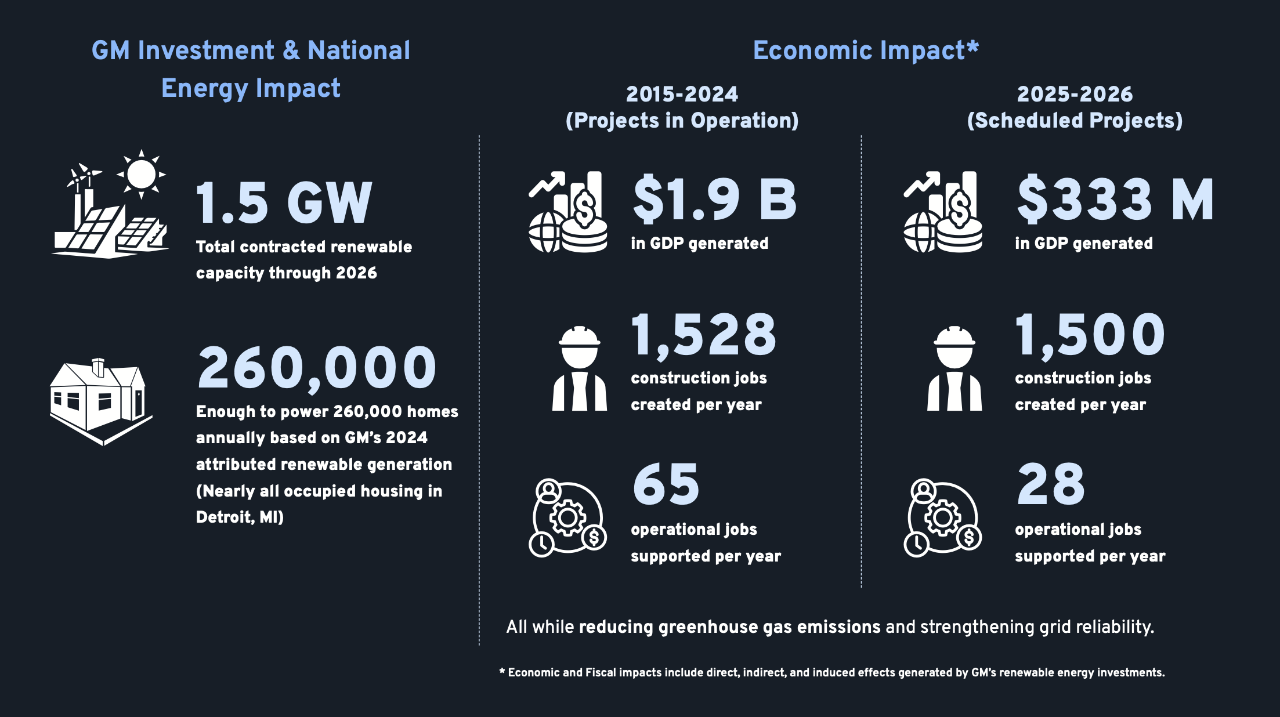
Since 2015, domestic renewable projects have generated approximately $1.9 billion in GDP impact, with contracted projects through 2026 expected to add a further $333 million.
These developments support an average of 1,500 construction jobs annually across multiple states, while contributing local tax revenues that fund schools and emergency services.
Energy transition delivers operational advantages
Garber emphasized that the shift to renewable energy is not only about emissions reduction but also about strengthening operational resilience and cost stability.
“GM’s transition to clean energy isn’t just better for the environment — it’s smart business,” she said.
The company points to several key benefits:
“Price stability: Long-term renewable contracts insulate GM from energy market volatility.”
“Grid resilience: More clean energy on the grid means a more dependable system for everyone.”
“Energy independence: Reduced reliance on foreign energy imports strengthens the local communities our facilities depend on.”
Supply chain engagement becomes the next frontier
GM is now extending its decarbonization efforts beyond its own operations, signaling expectations across its supplier ecosystem.
“GM is also sending a clear signal to suppliers and partners: join this decarbonization journey,” Garber noted, highlighting initiatives such as Transform: Auto aimed at accelerating renewable energy adoption across the automotive value chain.
From factory floor to EV future
The company’s renewable energy strategy is already embedded in key manufacturing sites.
Facilities such as Factory ZERO in Detroit and Spring Hill Manufacturing in Tennessee are powered through clean energy programs, supporting production of electric vehicles including the Chevrolet Silverado EV, GMC Sierra EV, and Cadillac LYRIQ.
For Garber, the connection between clean energy and electrification is direct.
“The zero-emissions journey starts before an EV customer ever hits the accelerator,” she said.
Decarbonization and growth go hand in hand
Looking ahead, GM’s progress is positioned as proof that sustainability and economic performance can align at scale.
“Achieving GM’s renewable goal in the U.S., and making continued progress internationally, proves that decarbonizing its footprint and driving economic growth aren’t in conflict,” Garber said. “GM is building the vehicles — and the energy systems — that will help us all enjoy an all-electric future.”
This article was produced by the editorial team at Sustainability Outlook and published as part of the Outlook Publishing global network of B2B industry magazines.
Outlook Publishing delivers industry insights, company stories, and sector coverage across sustainability, energy transition, manufacturing, mining, construction, supply chains, healthcare, and food production.
Sustainability Outlook provides ongoing coverage of organisations and developments shaping the global sustainability landscape.