



Sustainability is no longer being treated as a standalone supply chain objective. Instead, large enterprises are embedding environmental goals directly into operational efficiency, planning, and decision-making—reflecting a broader shift in how supply chain leaders approach resilience, cost control, and long-term business performance.
The Key Report Findings
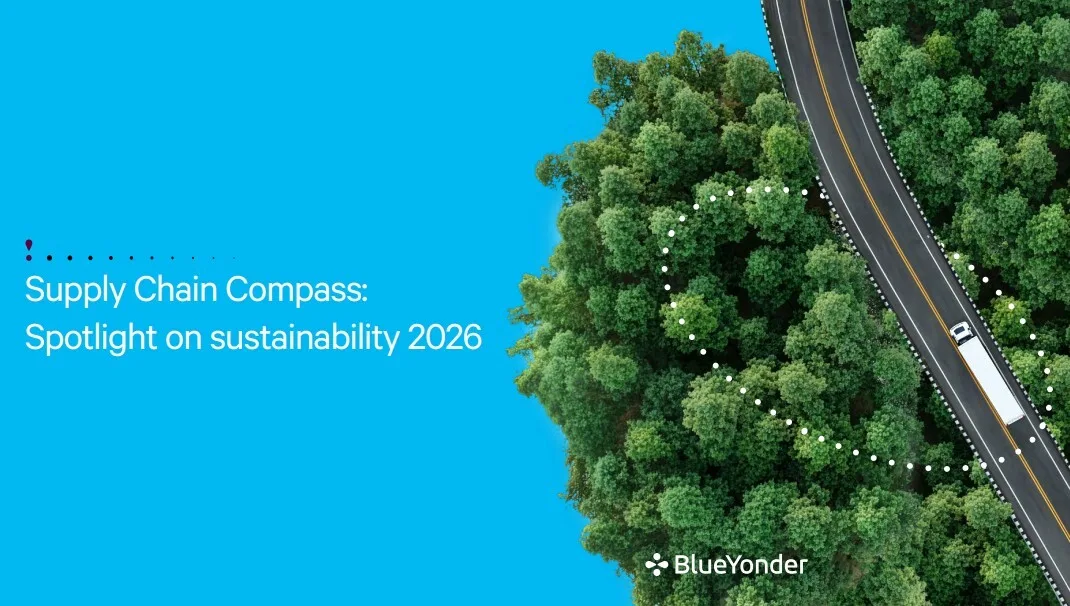
According to Blue Yonder’s new 2026 Supply Chain Compass: Spotlight on Sustainability report, which surveyed 678 senior supply chain professionals across North America and Europe from enterprises with more than $500 million in annual revenue, Blue Yonder’s data shows sustainability is top of mind for many leaders.
- 66% of leaders are actively working to reduce their supply chain’s impact
- 47% of large enterprises have created dedicated sustainability teams
- 56% agree supply chain operators bear responsibility for helping solve issues like inflation and climate change
- Only one in five supply chain leaders say they are confident in achieving their sustainability objectives
With supply chains responsible for 60% of global carbon emissions, sustainability remains a growing strategic priority—even as leaders continue to manage inflation, tariffs, labor challenges, and operational disruption.
Efficiency Is Driving Sustainability Progress
Rather than pursuing sustainability as a separate ESG initiative, many organizations are advancing environmental goals through operational improvements.
More than one-quarter of respondents (26%) identified data and traceability as the primary actions needed to improve sustainability efforts, while 33% pointed to forecasting technology as a major sustainability opportunity.
This shows that stronger planning, better visibility, and improved operational decisions are increasingly viewed as the foundation for both lower costs and lower emissions.
“Sustainability remains a priority, even in a year marked by immediate business risks like tariffs, disruption and inflation,” said Saskia van Gendt, chief sustainability officer at Blue Yonder.
“Right now, efforts are primarily focused on improving efficiency and productivity and making faster, better decisions, which can translate into less waste, more sustainable operations and cost savings. Sustainability is no longer a discrete objective, but a strategic element of mature, modern business plans.”

Dedicated Sustainability Teams Are Expanding
The report also highlights how internal organizational structures are changing.
Nearly half of respondents (47%) say their companies have created dedicated sustainability teams, even though only 12% list sustainability among their top three strategic priorities—down from 24% last year.
Rather than indicating reduced focus, this suggests sustainability is becoming embedded across operations, logistics, and planning functions instead of being managed as a standalone initiative.
At the same time, 56% of respondents agree that supply chain operators have a responsibility to help solve broader challenges such as inflation and climate change, reinforcing the growing strategic role supply chain leadership plays across the business.
AI Is Still Viewed Primarily as an Operations Tool
While artificial intelligence continues to shape supply chain transformation, most leaders still see AI first through the lens of operational performance rather than sustainability.
The top three reported benefits of AI were:
- Better planning and predictability (29%)
- Better risk management (26%)
- Faster, better decision-making (23%)
Only 11% said AI could directly deliver sustainability benefits, while just 13% identified enhanced traceability as a key AI advantage.
This highlights a perception gap: the same capabilities leaders value for speed, efficiency, and resilience can also reduce waste, improve resource use, and lower emissions.
Confidence in Sustainability Targets Remains Low
Only one in five supply chain leaders say they are confident in achieving their sustainability objectives. Additionally, 25% believe current sustainability targets do not go far enough, while another 25% say the right sustainability initiatives would be disruptive to current processes.
This suggests many organizations recognize that incremental improvements alone may not be enough—and that meaningful sustainability gains often require significant operational change.
Technology Is Becoming the Enabler
To help organizations turn sustainability goals into measurable action, Blue Yonder has introduced updates to several of its sustainability solutions, including its Logistics Emission Calculator and Sustainable Supply Chain Manager.
These tools are designed to improve emissions reporting, strengthen transportation visibility, and embed carbon impact directly into supply chain planning, allocation, and replenishment decisions.
“Pursuing sustainable supply chains means changing processes, which is challenging for every organization,” added van Gendt.
“Now technology can accelerate change by integrating sustainability into supply chain decision making and optimization while achieving greater adaptability, resilience and staying power in the market.”
This article was produced by the editorial team at Sustainability Outlook and published as part of the Outlook Publishing global network of B2B industry magazines.
Outlook Publishing delivers industry insights, company stories, and sector coverage across sustainability, energy transition, manufacturing, mining, construction, supply chains, healthcare, and food production.
Sustainability Outlook provides ongoing coverage of organisations and developments shaping the global sustainability landscape.