



Companies can measure environmental impact across complex global value chains by moving beyond spend-based methodologies and using more product-based measurement approaches. Spend-based models estimate emissions according to financial spend but are often inaccurate and can penalise companies investing in more durable or longer-lasting products or components, even when lifetime emissions are lower. Instead, organisations should use real product and manufacturing data wherever possible.
Lifecycle assessments (LCAs) can improve accuracy by measuring environmental impact across the full product lifecycle. Companies can identify emissions hotspots, compare materials and processes more effectively, and avoid misleading conclusions based solely on financial spend.
To build a reliable baseline, companies should first focus on areas within their direct control before expanding measurement across the wider supply chain. However, complexity increases further upstream, particularly in industries such as IT with thousands of suppliers.
Because reliable supplier data is often difficult to obtain, businesses should take a risk-based approach. This includes identifying high-impact materials and critical minerals, conducting targeted assessments in priority areas, and improving traceability where it matters most.
Looking ahead, digital product passports could improve transparency by providing more consistent product and supply chain data, helping companies make more informed sustainable purchasing decisions.
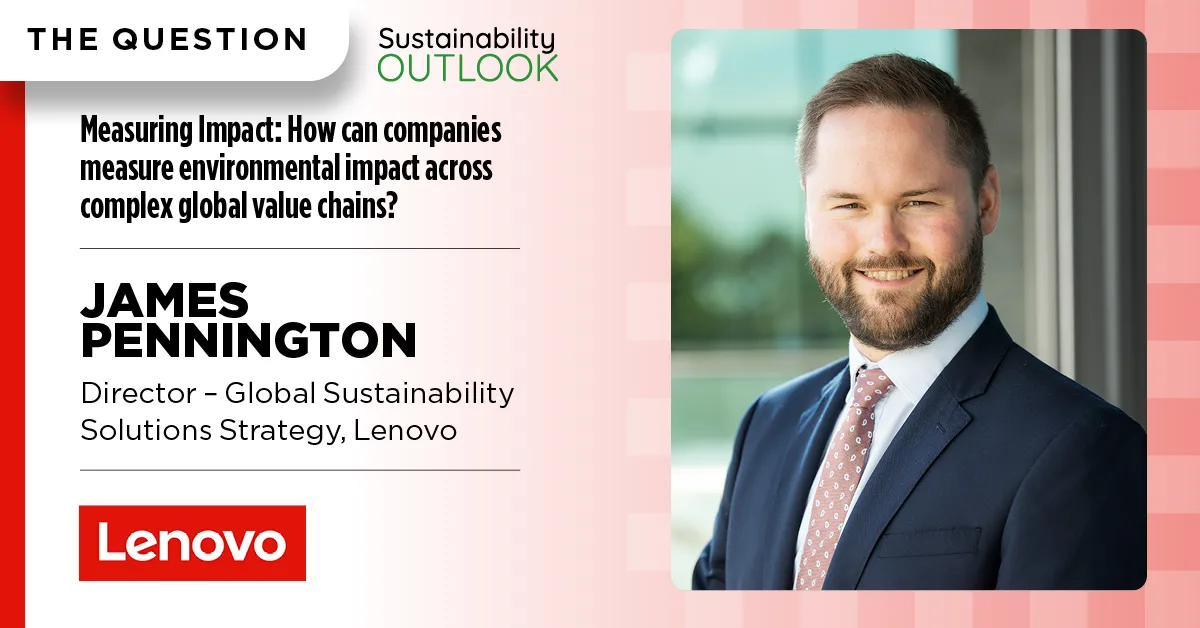
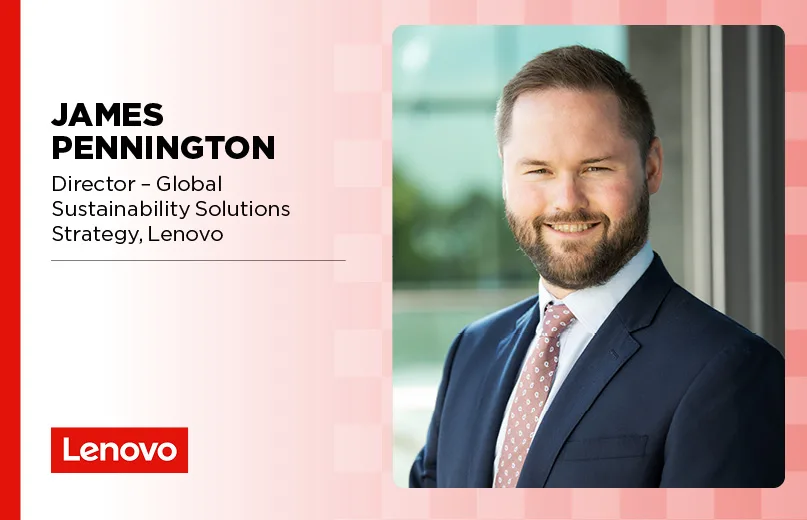
James Pennington
Global Sustainability Solutions Strategy, Lenovo
About James Pennington
James Pennington drives Lenovo’s Sustainability Services strategy, focusing on external and internal advocacy, portfolio strategy, market reach, and trends for climate, energy, and circularity portfolios. Pennington is based in London and brings a wealth of expertise in the circular economy, sustainability strategy, and environmental leadership.
About Lenovo
Lenovo is a USD$83 billion revenue global technology powerhouse serving millions of customers every day in 180 markets. Guided by its vision of ‘Smarter Technology for All’, Lenovo is executing a Hybrid AI strategy that is helping customers turn data into insights and value.
The Question is a thought leadership series published on Sustainability Outlook, created to explore the questions shaping climate action, environmental responsibility, decarbonisation, and sustainable business transformation.
Sustainability Outlook features leadership insights and company stories from organisations advancing progress across renewable energy, circularity, responsible sourcing, ESG, sustainable technology, and the transition to a low-carbon economy.
Produced as part of the Outlook Publishing global network of B2B industry magazines, The Question brings focused executive insight to audiences engaged with the companies, strategies, technologies, and decisions shaping a more sustainable future.