




Measuring environmental impact across global value chains begins with visibility, yet many companies still face fragmented data, inconsistent supplier reporting, and limited traceability beyond Tier 1 suppliers. In distributed manufacturing networks, businesses must move beyond periodic reporting and adopt continuous, data-driven monitoring embedded directly into supply chain operations.
Effective approaches combine digitalisation with standardised sustainability frameworks such as the GHG Protocol to improve Scope 3 emissions visibility. Many organisations still spend most of the year collecting and reporting environmental data instead of acting on it. AI-enabled monitoring, automated supplier data collection, and real-time verification tools now allow companies to shift from retrospective reporting towards faster operational decision-making.
Improving visibility beyond Tier 1 suppliers also requires stronger collaboration across supply chains. Companies need systems that encourage suppliers to share consistent data, align on measurement methodologies, and build transparency over time rather than relying solely on annual compliance requests.
Measurement alone is not enough. Businesses must turn data into actionable insights that drive accountability and collaboration across the value chain, embedding environmental intelligence into sourcing, procurement, and operational decision-making. This shift will help organisations reduce reporting burdens, strengthen supplier engagement, and respond more effectively to evolving sustainability expectations and regulations worldwide today.
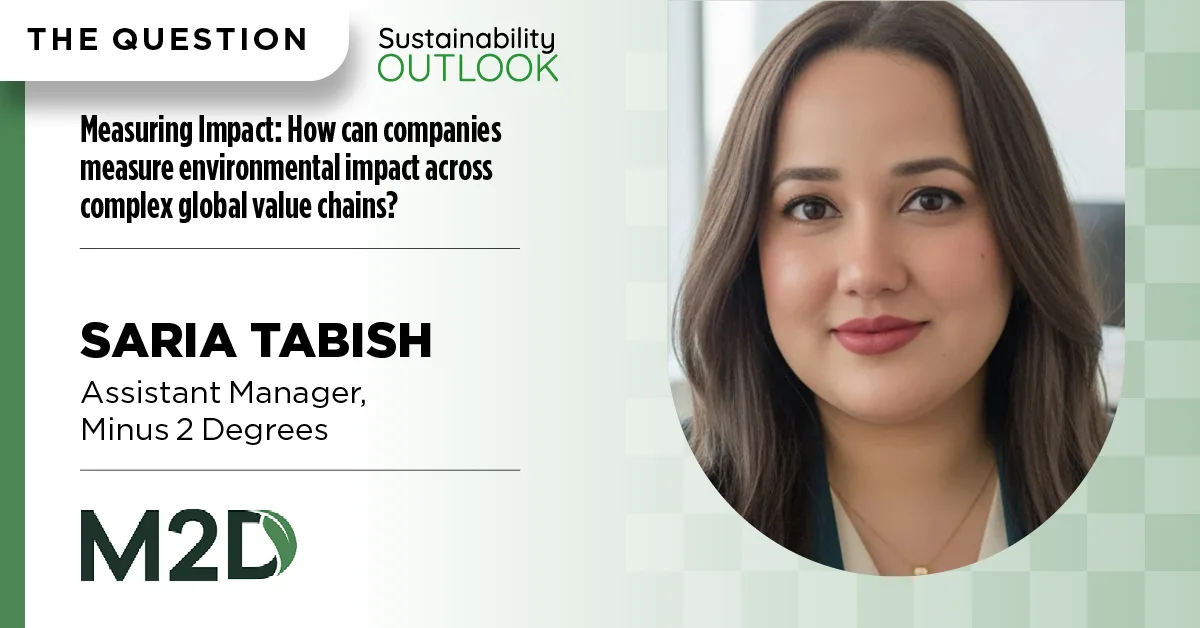
Saria Tabish
Assistant Manager, Minus 2 Degrees
About Saria Tabish
Saria Tabish is a sustainability advocate and emerging professional passionate about driving meaningful environmental and social impact through collaboration, innovation, and education. At Minus 2 Degrees, Tabish contributes to initiatives focused on fostering sustainable business practices, workplace engagement, and community-driven impact.
About Minus 2 Degrees
Minus 2 Degrees is a global leader in sustainability solutions, providing organisations with cutting-edge tools for emissions monitoring, decarbonisation strategies, and achieving net zero goals.
The Question is a thought leadership series published on Sustainability Outlook, created to explore the questions shaping climate action, environmental responsibility, decarbonisation, and sustainable business transformation.
Sustainability Outlook features leadership insights and company stories from organisations advancing progress across renewable energy, circularity, responsible sourcing, ESG, sustainable technology, and the transition to a low-carbon economy.
Produced as part of the Outlook Publishing global network of B2B industry magazines, The Question brings focused executive insight to audiences engaged with the companies, strategies, technologies, and decisions shaping a more sustainable future.